All posts

GiveDirectly is built on the core belief that people living in poverty know what they need better than anyone else. That belief is part of what led our team to test an unrestricted AI chatbot – with funding from Imara Fund, a foundation co-founded by Reed Hastings and Constance Jones – alongside cash transfers in Rwanda. This represents a different approach from the restricted AI tools many other organizations are offering.
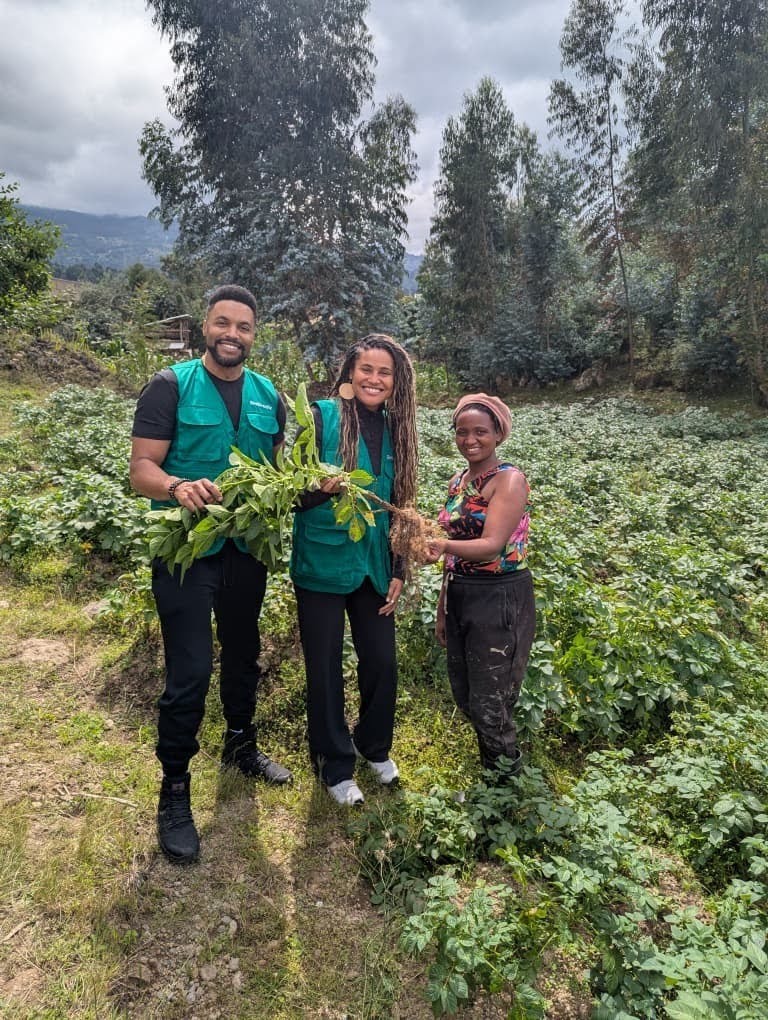
The two of us had seen how much can hinge not only on money, but on access to the right information at the right time – Sharon from years of working directly with Rwandan entrepreneurs, and Carolina from designing programs for vulnerable communities around the world.
We know that cash gives people room to make their own choices. AI can be one way to help them make more informed ones, especially in places where reliable coaching, advice, and services are harder to reach.
AI is filling gaps that cash alone cannot
Alongside our usual one-time ~$1,000 transfers, we offered recipients in Rwanda a ChatGPT-powered chatbot on WhatsApp, developed with Turn.io, so they could ask questions in a tool many already know how to use.
Our team had three main uses in mind: helping people plan how to use their cash, think through business ideas, and get answers about the GiveDirectly program. And people do often use it that way. They ask how eligibility works, how to make spending decisions, and how to manage the practical details of new investments– from how to get fruit to a more distant market to caring for livestock.
But the more revealing pattern was how quickly recipients moved beyond those program-specific questions. They used the chatbot for the ordinary, messy decisions people bring to AI everywhere:
- How do I manage conflict with my wife?
- What should I do if my child is sick?
- Where can I find markets outside my community?
- Who can I trust in my neighborhood?
Recipients using the chatbot in this way isn’t particularly surprising or unprecedented. They use it the way people use AI everywhere: to think through money, work, family, health, and trust. But in many of the places we work, people often have fewer places to turn for a second opinion, practical advice, or timely information. The community health facility, business coach, or legal aid office that might otherwise have the answer may be far away, expensive, or entirely unavailable in their community. The chatbot suddenly put tons of it at their fingertips.
Recipients turn to the chatbot as a sounding board for business plans, family advice, and more.
All quotes are verbatim from inbound messages by Rwandan recipients, translated from Kinyarwanda.
Source: Rwanda chatbot pilot inbound-message analysis, Nov 2025 – Feb 2026.
“The robots work at night”
Traditional training and support programs are often delivered during the day, at fixed times, and in group settings. But many people do not have the luxury of structuring their lives around when support systems are open, especially in places like rural Rwanda, where many people spend their days tending farmland or working a market stall.
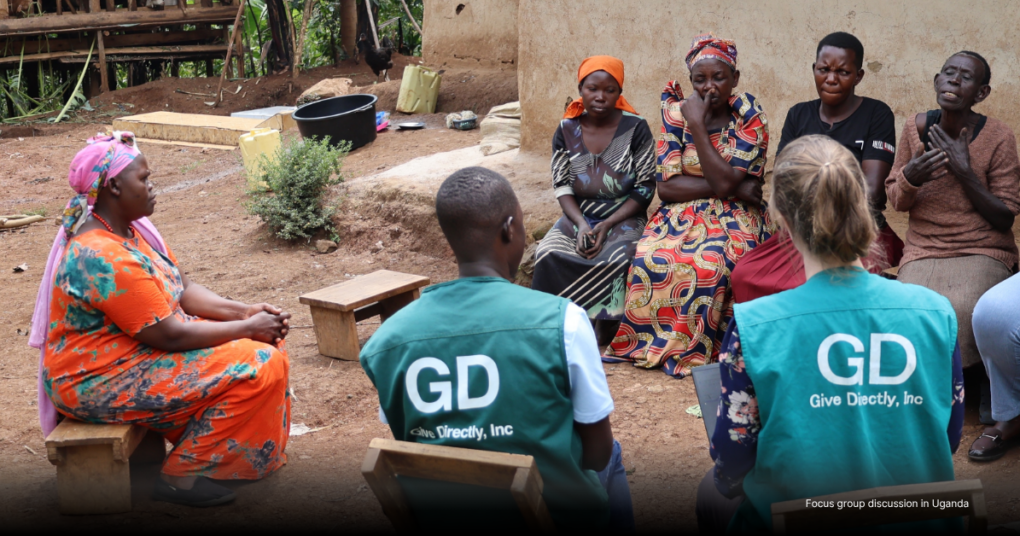
A chatbot, on the other hand, is available whenever they are. It’s there after the children are asleep, during a quiet moment at work, or at the end of a long day when there is finally time to think. As one recipient put it in a focus group discussion, “The robots work at night.”
In many cases, that timing is part of the value. The chatbot creates space for people to reflect privately, experiment with ideas, and ask questions they may not otherwise have an opportunity to ask.
Recipients reach the chatbot at the moments that fit their day, often during work hours and at night.
Recipients are often working through the day, typically at the same hours that banks, government offices, and other formal services are open. The chatbot meets them where they are: a quick question between tasks at midday, then again after work when formal services have already closed.
Source: Rwanda chatbot interaction export, Nov 2025 to Apr 2026. 21,169 inbound interactions (messages, voice notes, photos, and menu taps) from 832 unique Rwandan recipients. Timestamps converted from UTC to Central Africa Time (UTC+2).
People trust the chatbot because it is not human
People everywhere bring sensitive questions to chatbots, often because they want privacy, patience, or a lower-stakes place to think out loud. Recent research from Anthropic found that millions of people already turn to Claude for personal guidance on health, careers, relationships, and finances – often because they cannot easily access or afford professional advice.
In close-knit communities in rural Rwanda, that choice can be especially delicate. People may be reserved about personal matters, and many are cautious about sharing information that could expose them to scams, pressure, or criticism. In that context, the chatbot’s non-human nature can be part of what makes it feel safer. It offers privacy, patience, and freedom from social judgment.
Because of that, many people treat the chatbot like a sounding board. They greet it, confide in it, and return to ongoing conversations over time.
The next frontier for AI inclusion may be language, voice, and localized context
Many of the barriers to AI uptake in lower-income countries are structural. Patchy internet, expensive data, and low-quality phones all shape how people use these tools, and the broader infrastructure work to address them has been underway in Rwanda for years. Chatbots are also a new interface for most recipients, so there's a learning curve.
Other barriers come from gaps in the data that the models have been trained on:
- Language support is still limited. Language determines whether many users can meaningfully engage at all, and tools perform inconsistently in African languages like Kinyarwanda. A handful of small vendors are starting to close this gap. GiveDirectly is among the first users of Proto, which is doing this work in Rwanda.
- Voice functionality is underdeveloped. For many lower-literacy users, voice notes are their primary interface, but voice features are often unreliable, slow, or poorly adapted to these contexts.
- AI knows the cities better than the villages. Models mostly know about capital cities like Kigali; the more rural the setting, the less the AI knows about local markets, services, and conditions. That asymmetry shapes how useful these tools actually are for the people we serve.
Closing these gaps will take deliberate investment from AI developers and partnership with the organizations and communities who understand what 'useful' means in practice. We'll keep testing, learning, and sharing what we find – both to make our own programs better and to help the developers building these tools see what works in these contexts.
We're continuing to learn how AI can amplify the effects of cash
As we continue testing what makes cash more impactful, AI is becoming an increasingly important part of that conversation. This pilot suggests that AI has huge potential to expand what people living in extreme poverty can do with the resources they already have.
We’re also learning from organizations focused on building responsible AI: Research from Anthropic found that Claude users in sub-Saharan Africa were among the most optimistic about AI globally, and more likely than respondents anywhere else to want to use it to start a business or access education. In our pilot, we see the same optimism among people at the margins of today’s AI ecosystem.
Most major AI labs say their mission is to extend the benefits to all of humanity. The world’s poorest communities are not an edge case; they’re central to that mission. We think they are one of the clearest tests of whether these tools actually work for the people who could benefit from them most.
We are still early in this work, and we do not think the best answers will come from one pilot or one organization. We’ve already launched a similar pilot in Malawi, and we still have much more to learn. These pilots are helping us assess uptake and usability. Next we run A/B tests - first of different prompts to see which responds most effectively to recipients, then of ‘cash’ versus ‘cash plus chatbot’ to evaluate economic indicators.
If you are building, funding, or studying AI for low-resource settings, we would welcome the chance to think it through together. Get in touch - carolina@givedirectly.org.
FAQs
1. Does GiveDirectly read recipients' conversations with the chatbot? For this pilot, we are monitoring and analysing responses from the chatbot. When recipients enroll, we explain that their conversations may be reviewed by our team and we anonymize data before analysis. There’s a tension here: part of what recipients find valuable about the chatbot is that it feels like a private space to think out loud. We try to ensure this privacy through anonymisation while also accessing conversation data to improve the tool and monitor for safety issues. We disclose to recipients during the consent process that we may use their data this way, and make sure they know usage of the chatbot is 100% optional.
2. What happens if the chatbot gives bad advice? We've built guardrails for the highest-stakes categories: for questions that touch on dangerous topics, the chatbot is instructed to respond only by instructing recipients to reach out to the call center. We tested edge cases before launch and continue to monitor.
3. What do you do if a recipient says something that suggests they're in danger? Our call center team monitors conversations for anything that raises a red flag and they are able to reach out to recipients directly from the call center. We've also built specific guardrails into the bot itself - questions touching on self-harm, abuse, or other safety issues are flagged to the call center team and the chatbot is hard coded to respond by asking people to call our call center. This is an area where we're still learning. If you have experience designing safeguarding systems for AI tools in low-resource settings, we'd welcome your input.
4. Is a cash transfer organization the right entity to be deploying AI? GiveDirectly tests cash, and we test what could make cash work better. There's strong evidence that pairing cash with the right kind of information, coaching, or planning support can amplify its impact. AI is one way to deliver that kind of support at a scale and cost that actually makes sense. Whether it works well enough to be worth offering is exactly what we're testing. This work is also funded by private donors. Website donations do not fund the development or testing of our AI pilots by default.
5. Do recipients have to use the chatbot? No. The chatbot is offered alongside cash transfers and recipients are told explicitly that using it or not has no effect on their eligibility or payments. In practice, people use it when they find it useful and ignore it when they don't. In focus groups, many recipients said they wished they'd had it earlier. We think the right test isn't whether people requested it unprompted, but whether, given the choice, they find it worth having.
6. How will you know if it's actually working and what would make you stop? We're taking a deliberate phased approach. This first phase is assessing whether recipients can access and use the tool at all, and what they actually use it for. We're now running A/B tests on different prompt approaches to find out which are most useful. After that, we'll test cash alone versus cash plus chatbot on economic outcomes. If we don't see meaningful improvement in those outcomes, we won't scale. "People like it" is not enough. The bar is whether it measurably improves lives; the same bar we hold cash to.
7. Would recipients rather just have more cash? Our working hypothesis is that information and cash are complements, not substitutes: having money to invest may be more valuable when you also have access to advice about how to invest it. We’re still learning how pairing the two influences outcomes, and we’ll continue sharing what we find out.