All posts

Summary
💸 GiveDirectly sent 3,765 people $340 each, with first payments sent 21 days after the earthquakes.
🔓 We proved it’s possible to deliver cash through Pago Móvil, Venezuela’s widely used mobile payment system.
❤️ Cash helped people meet urgent needs and regain stability: 50% used cash on basic necessities like food and water, and 60% restarted or maintained income-generating activities.
📈 86% of every donated dollar reached recipients as cash.
Twin earthquakes struck a country already in crisis
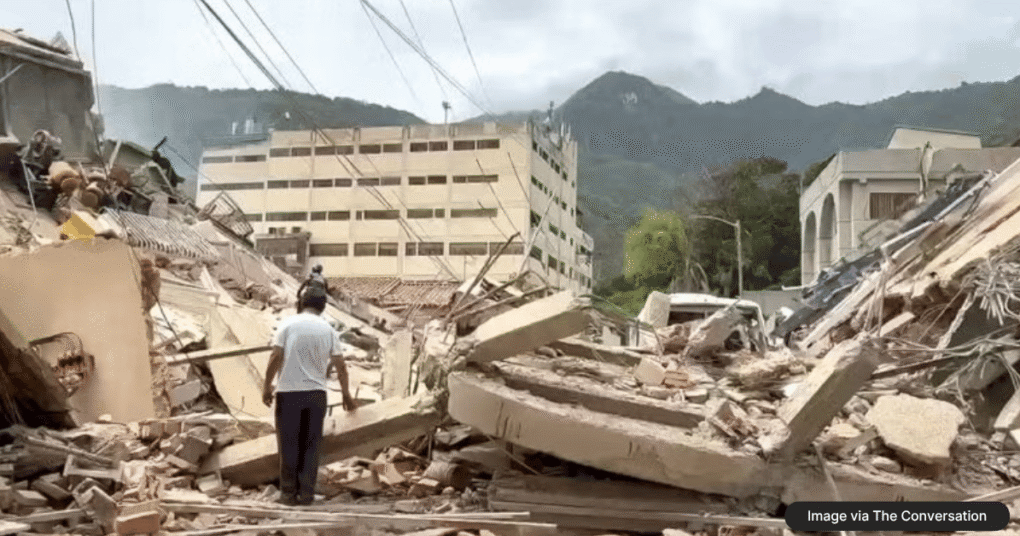
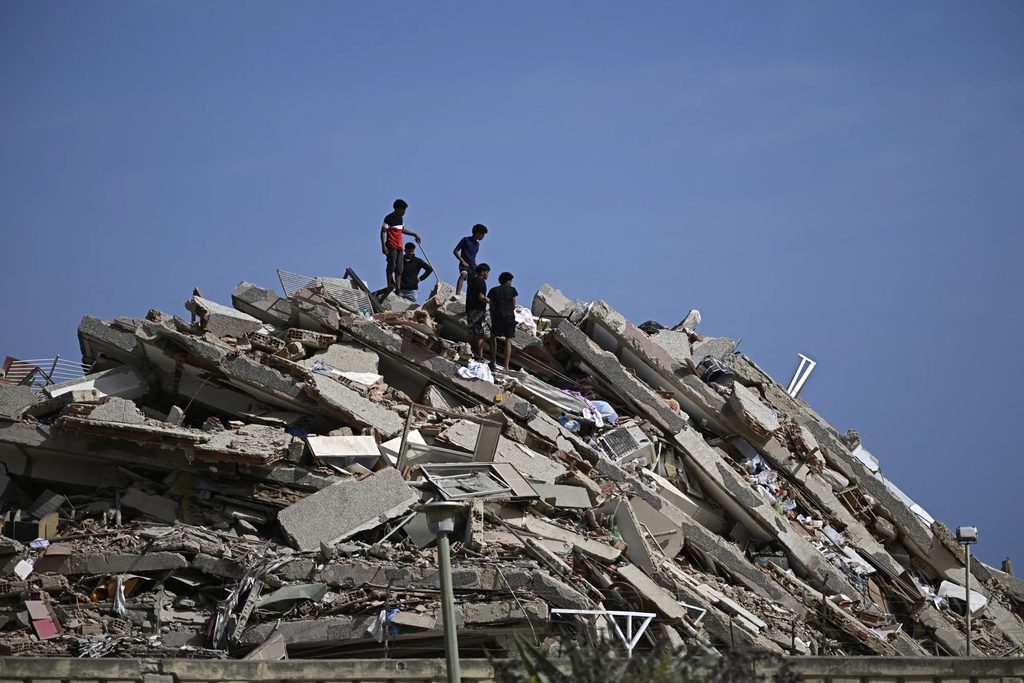
On June 24, two powerful earthquakes (7.2 and 7.5 magnitude) struck Venezuela. The second was the country’s strongest in over a century. La Guaira was among the hardest-hit areas, with reports indicating that 80% of buildings had collapsed.
Even before the earthquakes, 7.9 million people needed humanitarian assistance, driven by economic stagnation, inflation, and strained public services. More than half the population lived in extreme poverty (living on less than $3/day), making it harder for families to meet basic needs or recover from a major shock.
We deployed a field team to Venezuela within two days. After conducting our field assessment, we worked with local organization Alimenta La Solidaridad to deliver emergency cash in Catia La Mar, one of the hardest-hit and most underserved areas in La Guaira.
Actually sending cash to people was the hard part
GiveDirectly had never worked in Venezuela. We had no office, local team, or established payment route—and needed to build a response from scratch in a country where aid organizations face significant barriers.
Authorities have historically restricted cash assistance and closely scrutinized programs funded from abroad. A 2024 law added further restrictions on nonprofit organizations. Sanctions also complicated moving money into the country, limiting the banks and payment providers we could work with.
Each potential payment option posed a challenge.
- Local mobile payments: Many Venezuelans use Pago Móvil to send each other payments, making it a natural choice for recipients. But its connections to state-owned banks had led other responders to regard it as off-limits for humanitarian cash.
- Physical cash: Cash was scarce, collection points couldn’t reliably supply it, and inflation would quickly erode its value. Distributing cash after a disaster could also pose safety risks and make payments harder to track.
- Dollars and digital currencies: These are used in Venezuela, but common transfer options required recipients to hold U.S. bank accounts or involved intermediaries that didn’t meet our compliance requirements.
We needed a route that met legal requirements, managed risks, and delivered money through a system people already used.
We built a payment route others thought was impossible
We found a way to deliver cash through Pago Móvil—the local mobile payment system other responders thought was off-limits. Recipients received local currency directly in their existing accounts, without needing a new app or crypto wallet.
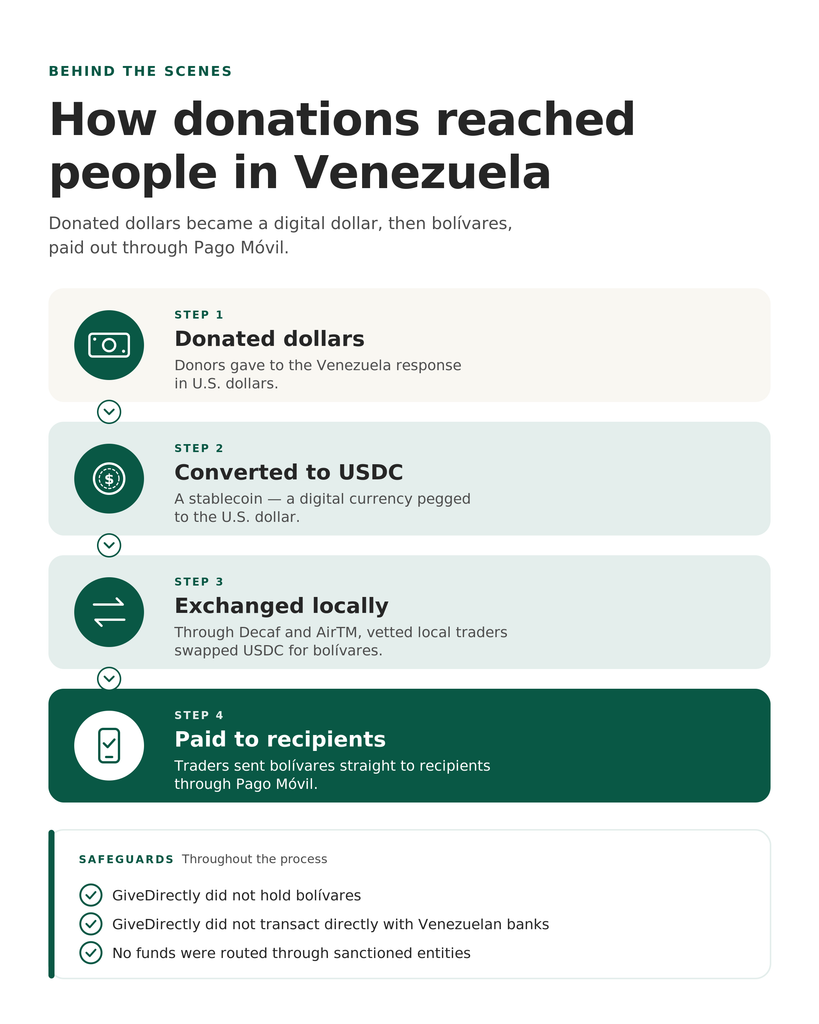
Payments arrived just two minutes after we sent a payment batch, with a failure rate below 0.5%. Stablecoins helped us move money into the country and recipients received local currency through a system they already used.
This was GiveDirectly’s first use of crypto for humanitarian cash transfers. We also received donations directly in crypto, including a $100,000 USDC matching grant from the Stellar Development Foundation.
💸Read a deep dive on how we figured it out payments
Pago Móvil offered a familiar way for recipients to receive money. The challenge was connecting to it from outside Venezuela while meeting sanctions requirements and finding a reliable supply of local currency. Typically, it would require access to a local bank, which is why many thought it wasn’t possible. So instead, we built a route through two providers: Decaf, a platform for sending stablecoin payments, and AirTM, a U.S.-registered money services business whose marketplace connects payments to local currency.
Here’s how a payment reached a recipient in Venezuela:
- We funded our digital wallet. GiveDirectly used Coinbase Business to convert dollars into USDC, a stablecoin pegged to the U.S. dollar. We then moved USDC from the Base blockchain to Stellar using Circle’s cross-chain transfer tool, CCTP, and into GiveDirectly’s wallet on Decaf. This funding step took roughly 30 minutes with no fees.
- Decaf ran compliance screening. Verified recipients provided their bank and Pago Móvil details, which Decaf screened for compliance, a process that took roughly 2-3 hours.
- AirTM’s marketplace supplied local currency. Vetted individuals and businesses, known as “cashiers,” accepted USDC in exchange for supplying bolívares. To replenish their funds, cashiers typically used crypto markets, including Binance, to exchange digital currency for bolívares held in their Venezuelan bank accounts.
- Cashiers paid recipients through Pago Móvil. The final step was an ordinary domestic bank transfer. Recipients received bolívares in their existing accounts without needing a crypto wallet or U.S. bank account.
GiveDirectly did not hold bolívares or transact directly with Venezuelan banks. The structure allowed us to fund payments through our providers while local cashiers completed the domestic transfers.
Payments were fast, but liquidity limited scale
Across 14 batches, payments arrived in a median of two minutes, although the longest batch took 24 hours. The final payment failure rate was below 0.5%, with failures mostly caused by incorrect recipient details.
The main constraint was how much local currency cashiers could supply. We initially planned for up to 1,200 payments a day. In practice, batches were limited to 100-300 recipients because cashiers reached daily banking limits or had insufficient bolívares available.
Dependence on crypto markets does leave us open to interruptions: a Binance maintenance window in late July caused a liquidity shortage that delayed payments. The route worked, but scaling it would require more reliable liquidity and alternatives when a provider or marketplace was unavailable.
Here’s how the rest of the response worked
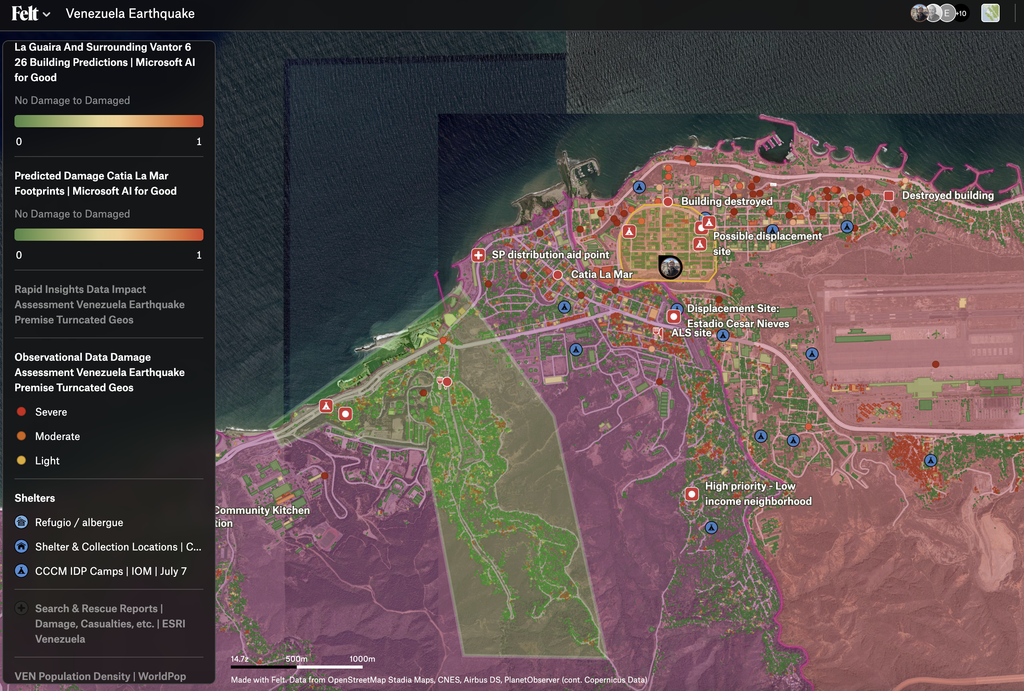
🎯 AI-powered targeting identified the hardest hit areas.
AI helped us move faster and target better. Our AI-powered targeting system generated an alert within minutes, telling us what had happened, where, and how severe the impact was.
We then ran our earthquake impact analysis, supplemented by satellite damage assessments from DISHA and volunteer mapping through the Humanitarian OpenStreetMap Team and MapSwipe to identify heavily damaged areas and informal displacement sites.
We ran low-cost Facebook ads with needs assessment surveys, and Felt brought the findings together on a shared map. Our field team checked the findings on the ground, helping resolve conflicting damage estimates and select the communities we would reach.
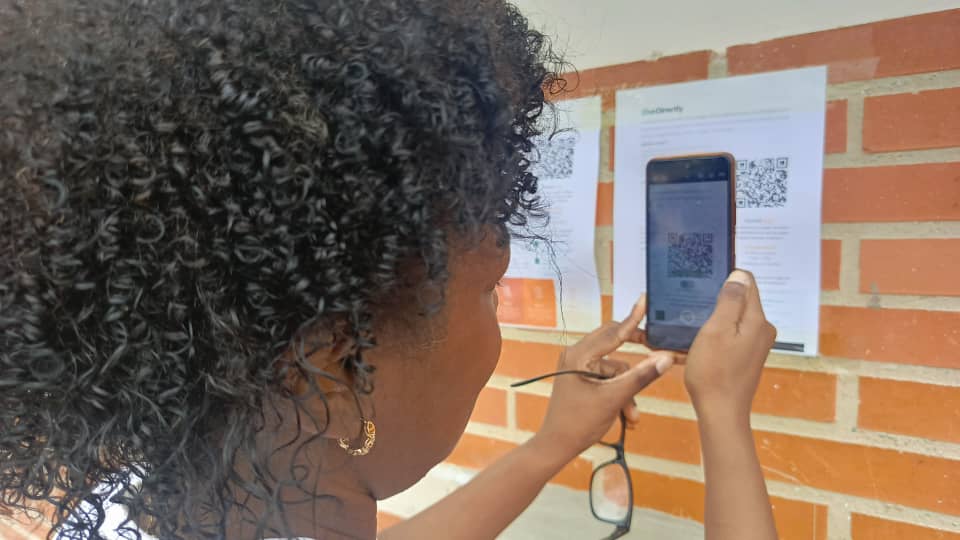
📲 Recipients could self-enroll from their phones.
We ran remote, self-service enrollment: People signed up on their phones using QR codes posted at Alimenta La Solidaridad’s community food distribution site in Catia La Mar. Enrollment grew as eligibility notifications and first payments built trust, and recipients shared the registration link with affected neighbors.
We used applicants’ phone locations to check whether they were in the target neighborhood. Due to a technical glitch, our registration form stayed open beyond the planned cutoff, so roughly 1,500 more eligible people enrolled than we had budgeted for. But donor support and our contingency fund allowed us to include everyone eligible.
✅Verification, payments, and customer support were all done remotely.
✅ Verification. Building on lessons from the Philippines and Madagascar, we automated identity checks using a national ID and live selfie. We checked IDs and phone numbers for duplicate applications and analyzed device and behavior signals to flag potential fraud. Only 5% of applications needed manual review, compared with nearly 100% in our first Philippines response—helping us process applications faster.
⚡ Speed. First payments went out 21 days after the earthquakes. That’s quite fast considering we had to vet and test new payment providers, navigate sanctions requirements, and build an enrollment system in a country where we had never worked. Once recipients were enrolled and verified, the median time to payment was four days.
💸 Payments. We delivered $340 each to 3,765 people through Pago Móvil. Early follow-up findings show 95% reported an improved sense of stability and wellbeing, and 85% said the payment met or exceeded the amount they needed for immediate priorities.
📞 Recipient support. A Spanish-speaking support team answered questions about eligibility, helped resolve ID and payment issues, and handled scam reports through a toll-free helpline and WhatsApp. Recipients could speak directly with someone—including two neighbors who needed help sorting out registrations made with the same phone number.
📈 Efficiency. 86 cents of every donated dollar reached recipients as cash, above the 70-80 cents we had expected. Our largely remote model kept costs low, while our emergency contingency fund allowed us to reach more people than planned—spreading fixed delivery costs across more recipients and improving efficiency.
Cash helped families meet urgent needs and begin to recover
We followed up with recipients to hear how they used the cash and what difference it made. Early findings show:
- Cash covered essentials. Half of respondents bought food and drinking water. Families also bought hygiene supplies, paid for medicine and clinic visits, and replaced damaged belongings like mattresses and cooking stoves.
- Cash helped restore stability and livelihoods. 95% said their sense of stability and wellbeing improved, and 60% said cash helped them restart or maintain income-generating activities.
- Fewer people resorted to difficult choices. Among those who had been skipping meals, going without healthcare, or had taken children out of school, 68% reported stopping those coping strategies after the payment. Without the cash, 36% said they would have borrowed money or taken on debt, and 19% would have eaten less.
- Support arrived when families needed it. 97% said the money arrived at the right time, and almost all would choose to use Pago Móvil again.
But families still face a long road to recovery. Nine in 10 respondents continued to struggle to meet all their basic needs, and 7 in 10 were still away from their own homes. Asked what they would do with more cash, families pointed to home repairs.
One key lesson: We should have sent more than $340 per person
We set the $340 payment using a standard estimate of basic monthly expenses and assuming recipients had some income to cover part of those costs. We expected this amount to cover basic needs like food for three months. But when we followed up a month later, recipients said it lasted about three weeks on average.
Prices rose after the earthquakes, and many families had lost their income. More than 45% reported no regular income at follow-up. The payment helped with immediate needs, but our calculation underestimated the gap families faced.
We’re reviewing how we set payment amounts to better account for lost income, rising prices, and recovery costs. We’re also considering when additional payments could help as families’ needs change.
📋Read the other lessons Venezuela taught us for future responses.
- Revisit risk assumptions as the response unfolds. Concern that authorities might suspend the program pushed us to move quickly. That risk never materialized, but the urgency shaped decisions about delivery, such as paying in bolívares rather than stablecoins, which exposed our transfers to inflation. We’re adding checkpoints to reassess risks and the tradeoffs they drive.
- Set reliable enrollment cutoffs. Our registration form stayed open beyond the planned cutoff, so roughly 1,500 more people enrolled than we had budgeted for. Our contingency fund allowed us to include them, but future programs need reliable cutoffs and a backup way to close registration.
- Build trust alongside digital access. QR codes made registration accessible, but some recipients nearly didn’t sign up because they thought it was a scam. As in Jamaica, notifications and first payments helped build confidence. We’re strengthening community engagement and clear communications so people can trust the program from the start.
- Make digital enrollment more inclusive. Tight location criteria and first-come, first-served registration created barriers for older people and those without working phones or active payment accounts. Future responses will use more flexible location checks and better integrate help for people who cannot register independently.
Each lesson brings us closer to our five-day emergency cash goal—a world where families receive meaningful support within days of a crisis, wherever they are. The route we built in Venezuela gives us a foundation for future responses and shows how new payment options can help cash reach people even in the most difficult operating environments.