All posts

Summary
- 💸 After Hurricane Helene hit North Carolina in late 2024, GiveDirectly ran a program that delivered cash to 2,000+ impacted families
- ⏱️ Families got cash at two different recovery points: some at 1-3 months following the hurricane and others 9 months later
- 📊 An independent evaluation of the program found that cash was positively impactful in both phases, but in different ways
- ⚡ Early payments were described as “lifesaving”, helping cover basic needs immediately after the disaster
- 🏠 Later payments were described as “stabilizing”, supporting recovery, repairs, and financial security
- 💡 When designing disaster cash programs, timing and transfer amount should be tailored to intended outcomes
Hurricane Helene made landfall in September 2024 as one of the most destructive storms to strike the US mainland since Hurricane Katrina, leading to catastrophic flooding that devastated rural communities in western North Carolina. The storm caused an estimated $60 billion in damage across the region. Yet federal recovery funding covered only about $5.5 billion, or just 9%, of the total damage cost.
Recipients like Jennifer S. shared their experience of the hurricane’s aftermath:
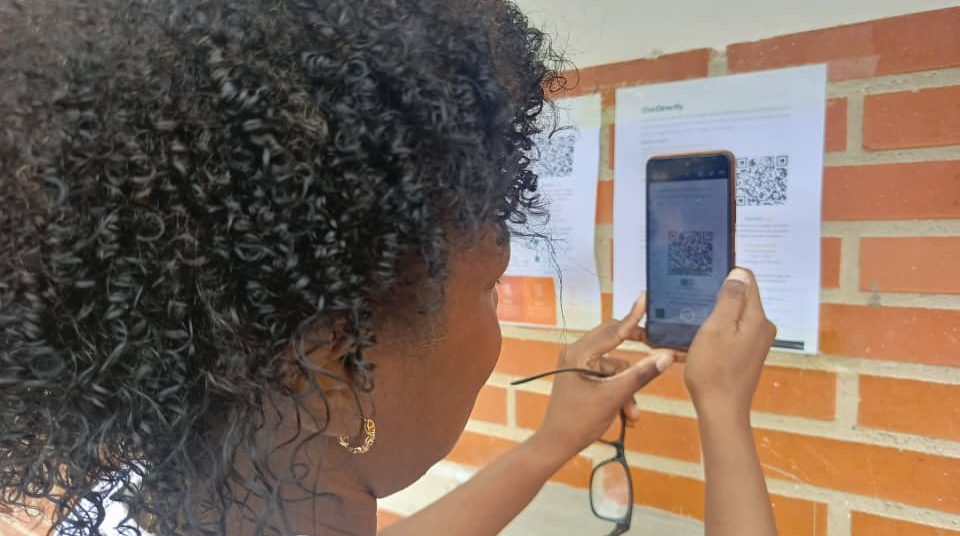
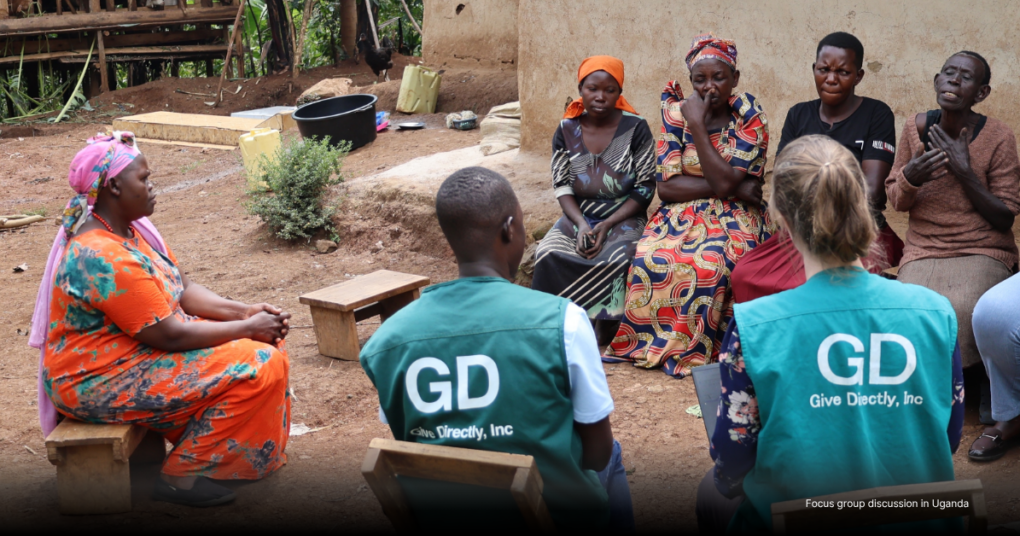
In response to Helene’s devastation, and with funding support from a number of locally based foundations, GiveDirectly provided one-time cash payments to eligible families across western North Carolina.1 The payments were delivered in two phases between October 2024 and June 2025, reaching a total of 2,101 families in need.
Families received cash at different times, allowing researchers to compare the impact of early versus later support.
An external research team from Appalachian State University evaluated our program, designing a mixed-methods evaluation to compare the effects of cash among those who received a payment 1-3 months after Hurricane Helene (Cohort 1) with those who received a payment approximately 9 months later (Cohort 2).
The researchers surveyed recipients from both cohorts, conducted in-depth individual interviews, and, where feasible, leveraged comparative data from the Western North Carolina Health Survey, a survey conducted in 2024 to track health and well-being outcomes across 18 North Carolina counties.
The table below outlines the details of each program cohort2:
| Cohort 1: Immediate Relief | Cohort 2: Long-Term Recovery | |
| Time from hurricane to payment | 1-3 months | 9 months |
| Payment date(s) | October – December 2024 | June 2025 |
| Program size | 1,462 recipients | 639 recipients |
| Targeting | Multiple western North Carolina counties, though primarily Buncombe | 5 counties in western North Carolina: Avery, Madison, McDowell, Mitchell, Yancey |
| Outreach and enrollment method | Propel app | Propel app, plus various digital and in-person outreach efforts |
| Payment method | Debit card | Bank transfer or debit card |
Whereas most US disaster cash programs are evaluated in isolation, the two-cohort model of this response allowed researchers to ask: how do factors such as timing and transfer amount impact the role of cash in a disaster context?
Both early and later payments had a positive impact, particularly on housing security and financial well-being.
Across both cohorts, recipients reported significant positive impacts from receiving cash. They described themselves as satisfied or very satisfied with the program (97% in Cohort 1, 100% in Cohort 2), and most agreed that the cash was easier to use, more flexible, and preferable to other forms of aid.
As one Cohort 1 recipient, Emily S. said, “When we got the payment, we could shop online for food, and it felt like a miracle — we cried. We were able to buy hot food, two toys for the kids, tires for the car, and wipes. Being able to spend on things we truly needed had such a positive impact on my mental health — it was an unbelievable, happy feeling.”
Cree H., a Cohort 2 recipient, echoed a similar sense of relief after receiving a GiveDirectly transfer: “My biggest worry was to find my kids a home. I was satisfied with it all. The cash helped a whole lot, and we are very thankful for it. I spent the funds on fixing the house I’m renting and my yard. The payment helped lift some weight off my shoulders.”
Cash led to improvements across a range of outcomes, particularly housing security and financial well-being3:
- Cohort 2 recipients who at baseline reported living in unstable housing situations after the hurricane (e.g., unhoused, staying in hotels, living with family) reported moving into more stable situations at endline.
- There were also notable improvements in housing quality – the percentage of people experiencing structural issues declined by 8.4 percentage points (down from 47% at baseline). This was described in detail by recipients from both cohorts in qualitative interviews, many of whom reported using GiveDirectly transfers to seek emergency housing after the storm or transition to more stable housing over time. One recipient recalled, “We was in this motel and we had to use that [GiveDirectly] money to stay in the motel… when we finally got out, we got a camper to live in… it has been a lifesend.”
- Between baseline and endline, Cohort 2 recipients reported a 6.6 percentage point increase in their ability to handle a major unexpected expense, their confidence in having a secure financial future rose by 3.3 percentage points, and their feelings of hopelessness about their finances declined by 1.3 percentage points.
Early payments covered urgent needs, while later ones helped people rebuild.
The clearest difference between cohorts was how the cash was used: Cohort 1 was more likely to refer to the cash as “lifesaving”, whereas Cohort 2 more commonly described it as “stabilizing”. The qualitative data suggests that timing in particular played a key role in these differential uses of cash.4
In interviews, Cohort 1 recipients reported using their cash for basic emergency needs like food, hotels or temporary lodging, and medication. For this cohort, the funds aligned closely with immediate recovery goals and filled gaps left by other aid. As one recipient said, “Especially when you didn’t get no help from FEMA… it really did help out a lot.”
By comparison, Cohort 2 recipients reported using the money toward long-term recovery, such as buying their children school supplies, making vehicle and home repairs, and keeping up-to-date on bills. Several said it “came at the right time” because “once all the other resources…was running out for everyone, then the money that came, I think that it was really even more helpful to wait a little longer.”
Recipients across both cohorts generally reported feeling positive about the timing of their payments. This suggests that there is no single “right” time at which to provide cash after a disaster. Both early and later payments can be effective, but they serve different purposes: early cash allows people to meet basic emergency needs, while later transfers support longer-term repair and stabilization.
Designing effective disaster cash programs requires tailoring timing and transfer amount to intended outcomes.
There is very limited evidence on the impact of cash in US disaster contexts, in part because operational and ethical constraints often make it difficult to design rigorous evaluations for these types of programs. The findings from our evaluation not only provide rare evidence for an understudied area of cash transfers, but they also shed light on key considerations for future program and evaluation design.
One key takeaway is that, in future disaster cash programs, we need to align design decisions around timing and transfer amount with desired recipient outcomes. Our research suggests that, in a disaster context, immediate cash is most appropriate if the intended outcome is to support basic survival needs, whereas later-stage and perhaps larger cash transfers may be ideal if the goal is stabilization and rebuilding.
GiveDirectly’s flexible response model is well-positioned to deliver both types of cash. But to do so effectively, we also need funding and community partners to step in at the right time: those able to mobilize resources quickly can help unlock immediate relief efforts, while those who can contribute later-stage support play a critical role in long-term recovery.
There may not be a single optimal time to deliver cash after a disaster, but timing does shape the impact cash has. Designing for that difference could be the key to helping families not just survive disasters, but truly recover from them.
- The first phase of the program was primarily funded by the United Way of Asheville and Buncombe County, the Leon Levine Foundation, and the Conrad Hilton Foundation. The second phase was funded by Dogwood Health Trust, WNC Bridge Foundation, and the Community Foundation of Western North Carolina. ↩︎
- Comparisons between Cohort 1 and Cohort 2 should be interpreted cautiously due to several limitations. Cohort 1 lacked a baseline survey, received a different payment amount, and covers a partially non-overlapping geographic area relative to Cohort 2. Despite these differences, the researchers examine endline outcomes across financial situation, housing, food security, psychological well-being, and stress. Across these dimensions, the estimated differences between Cohort 1 and Cohort 2 are generally small and statistically insignificant. These findings suggest that, despite structural differences across cohorts, the endline outcomes are broadly comparable, with no detectable cross-cohort effects. ↩︎
- While researchers collected qualitative data for both cohorts, they focused their quantitative analysis on the changes within Cohort 2, since Cohort 1 didn’t have baseline data available. ↩︎
- The researchers acknowledge that it is difficult to fully disentangle the effects of timing from the effects of transfer amount when comparing between the two cohorts. Additional research is needed to more precisely isolate the effects of timing and transfer amount, and the researchers caution that these findings should be viewed as directional rather than definitive causal effects. Given the dearth of research on disaster cash in the U.S., this descriptive evidence is nonetheless valuable to understanding how unconditional cash may vary in use at different recovery points. ↩︎