Cash Relief: Middle East Crisis Price Shock in Africa

The Iran war is raising prices for the world’s poorest. Send cash now.
When fuel prices spike, families in extreme poverty feel it first.
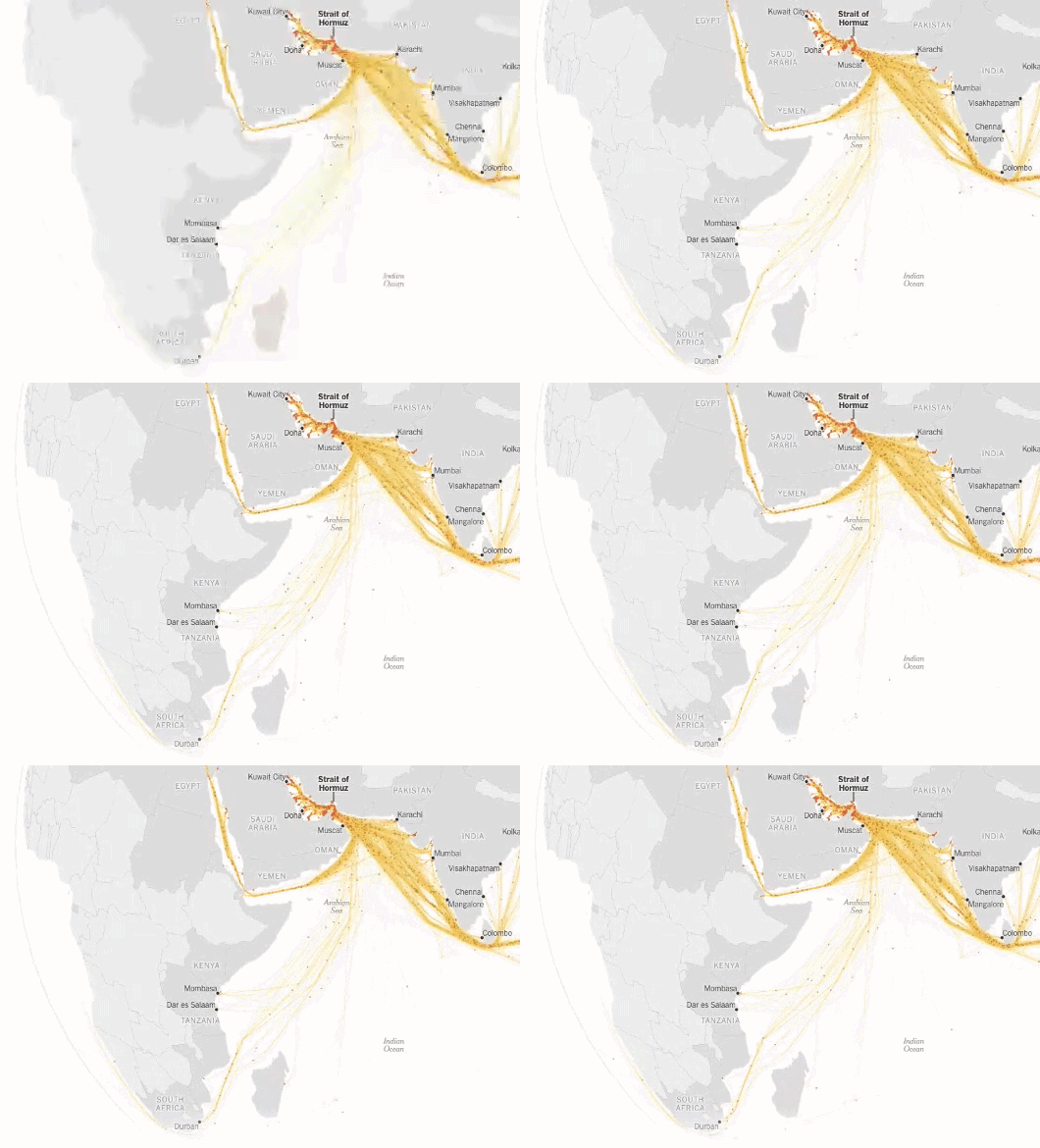
The conflict that began February 28th has disrupted oil and fertilizer shipments through the Strait of Hormuz, a chokepoint for 20% of global oil supply. The knock-on effects are hitting the countries where we work hard and fast.
Crude oil went from $69 a barrel in February to $104 in March. Urea — the most widely used synthetic nitrogen fertilizer — is up roughly 50%, with spring planting underway across East Africa.
The World Bank says this is “one of the largest disruptions to global energy markets in modern history,” with the burden falling hardest on low-income, import-dependent economies.
The UN projects that up to 32.5 million people globally could be pushed into poverty by the combined shock of rising energy costs, food prices, and slowing growth — and calls targeted cash transfers the single most effective policy response.
Impacts hitting the countries where GiveDirectly works
- Kenya is seeing acute fuel shortages at stations across the country. Farmers report tractors sitting idle during planting season as diesel runs out.
- Malawi raised petrol prices 34% and diesel 35% in a single regulatory adjustment. In a landlocked country where nearly everything moves by truck, that’s an immediate food price problem.
- Mozambique imports roughly 80% of its fuel through the Strait of Hormuz. They’re preparing for price hikes of their own, with panic buying already causing supply strain.
- Rwanda, Uganda, DRC are all landlocked and depend on ports in Mombasa and Dar es Salaam for fuel. With no petroleum tankers on schedule at either port for weeks, all three face compounding shortages if the conflict continues.
Why cash, why now
Families living on a few dollars a day don’t have a buffer. When food costs more, they eat less. When transport costs more, they can’t get to work or a clinic. Cash gives them options.
When prices spike, in-kind aid — food shipments, supply kits — faces the same supply chain problems everyone else does. Cash moves differently. It goes directly to a recipient’s mobile money account. They spend it on what they actually need, when they need it. We’ve delivered to over 2 million people across 15 countries. We know how to move fast.
The UN put it plainly: “There is a positive economic payout for giving short-term cash transfers to avoid people getting back into poverty.” Their analysis estimates the cost of reaching everyone pushed below the poverty line by this crisis at $6 billion. Private giving is part of how that gap gets filled.
We’re delivering cash right now to families across Kenya, DRC, Malawi, Mozambique, Rwanda, and Uganda.
Your donation will support those cash transfers.
Press



Frequently Asked Questions
Where does my donation go?
Donations through this page go directly to cash transfers for families living in extreme poverty across Kenya, DRC, Malawi, Mozambique, Rwanda, and Uganda — the countries now facing the sharpest fuel and food price shocks from the Middle East conflict. Separately, we are also scoping a dedicated emergency response in the Middle East, which you can support here.
Who receives the cash?
Families living in extreme poverty in the countries where we operate, identified through our standard enrollment process using poverty data. We do not charge fees or add conditions; recipients decide how to spend the money based on what they actually need.
How much does each family receive?
Transfer sizes vary by program. We review amounts periodically based on inflation and exchange rates, and are actively monitoring whether adjustments are warranted given current price shocks. Full program details on our country webpages.
Why does giving now matter?
Families making major decisions right now — whether to plant, whether to travel for work, whether to stock a small shop — are making them under acute pressure. A 34% fuel price hike in Malawi or weeks-long port delays affecting landlocked Uganda hit hardest when there’s no buffer. Cash that arrives during a crisis creates options that cash arriving later doesn’t.
How are you tracking the impact of the price shock on recipients?
Our field teams are collecting real-time reports on fuel availability and price changes across all six countries. The data points on this page come from those observations alongside public sources.
Won’t this be resolved with a ceasefire?
A ceasefire may not reopen trade routes quickly. And even when it does, it will not reverse these shocks. According to the FAO’s chief economist, conflict lasting beyond 40 days triggers farmer behavioral changes — reduced fertilizer use, smaller planted areas, crop switching — that carry through to the 2026 and 2027 harvests. That threshold was crossed on April 9th. The food security consequences of this war are already written into harvests that haven’t yet been planted.
What are governments doing to help people in the countries where you work?
The World Bank is tracking government responses to the price shocks globally.
Sub-Saharan Africa has recorded 10 government actions total — compared to 51 in the Middle East and 48 in East Asia. Kenya’s only logged action is anti-hoarding enforcement. For Zimbabwe, the World Bank noted simply: “price increases rather than subsidies — reflects reduced capacity to buffer prices.”
Wealthier countries have deployed fuel subsidies, cash transfers, and strategic reserves. In Sub-Saharan Africa, many governments have neither the funds nor the infrastructure for that kind of response.
What is GiveDirectly?
We’re a nonprofit that lets you send money directly to the world’s poorest, no strings attached. In the last decade, we’ve delivered cash to over 2 million people across 15 countries, and we research the impacts it can have for families in need.
What if I’d like to make a major gift?
We’d love to hear from you! Reach out to us at info@givedirectly.org.
Is my donation tax-deductible?
Yes, donations are tax-deductible in the United States. We accept all major credit and debit cards, PayPal, checks, wires, stocks, cryptocurrencies, and more.
If you’re giving outside the U.S., you can still give to this campaign, but your gift may not be tax-deductible. Reach out to us at info@givedirectly.org with any questions or for more information on ways to give.